
When the Machine Stops: The Broken Career Path in the Age of AI
How AI supercharges experienced workers and leaves juniors behind

“Coding is largely solved,” claimed Boris Cherny, Head of Claude Code, in a podcast from February 2026. He also admitted, “100% of my code is written by Claude Code.” Boris is not the only developer who no longer writes code by hand. Spotify says its best developers “have not written a single line of code since December.” At OpenAI, a team has built and shipped an internal beta of a software product with “0 lines of manually-written code.”
After reading all this news, you might wonder: if AI is already so good at coding and will only get better, do we still need human developers? Or can anyone build software just by talking to AI? Yet if you look closely, you’ll notice that all these people are senior developers with years of experience. Before AI coding tools became available, they wrote countless lines of code, learned several programming languages, and spent a lot of time debugging and solving technical challenges. It’s exactly because of this experience that they can plan projects with AI, guide its code generation, and notice “code smell” when something is poorly done.
With some “vibe coding” tools, anyone without programming knowledge can create a fancy webpage or a simple app. But when a project gets more complex, experience is needed to maintain the code and add new features. Otherwise, you’ll probably find that AI keeps messing up the product, and fixing AI-generated code can take more time than writing it yourself. Even worse, because of the misleading idea of “Prompt Engineering,” some people believe they just need some special prompts to get perfect results. Yet how can you keep writing good prompts if you don’t understand what you’re doing?
As long as AI still needs instructions from humans, the more experience someone has, the more productivity gains they can get from AI. This applies to many other industries too. The problem is humans need opportunity, time, and practice to build experience (it can take ten years to train a good programmer). That’s the danger we’re facing: experienced workers become ten times more productive using AI agents, which eliminates many entry-level jobs, and junior workers won’t have the opportunity to gain experience. In the short term, we may see rising unemployment among young graduates as a tradeoff for a productivity boost. But after current senior staff retire, no one can take over their jobs because the career path has been broken.
On the other hand, by providing quick answers, AI eliminates necessary struggles and thinking along the way to learning. If junior workers always outsource critical thinking and essential skills to AI, they’ll never acquire real knowledge and can’t do much when AI stops working.
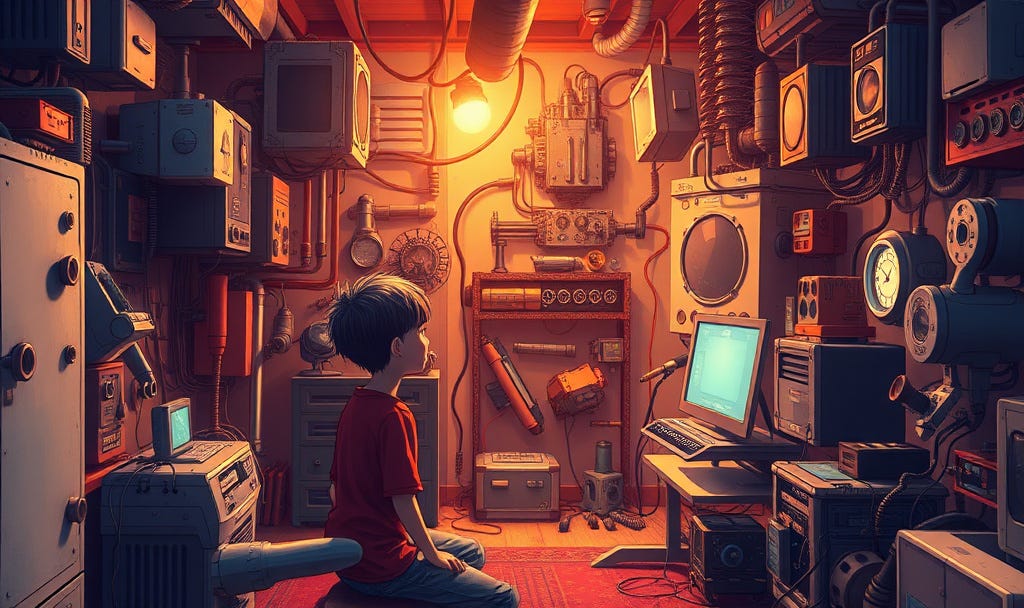
In the novel The Machine Stops (1909), human beings become completely dependent on the Machine, which provides everything including food, shelter, and entertainment. Over generations, people lose the knowledge of how the Machine actually works and become helpless when the Machine begins to fail.
We should continue training junior workers in the age of AI; otherwise, we might end up in a situation like the one described in the novel. Companies won’t do this voluntarily, but we might subsidize them to keep hiring entry-level workers, or we could create new training institutions. At the same time, we need to find a way to use AI for learning without becoming dependent on it. It might also be a good idea to leave some tasks for humans just for training, even if AI can do them better.
If we fail to transmit knowledge and skills, then let’s hope the Machine never stops.